
Why 89% of UK Workers Can’t Afford to Buy a Home Alone
Key Takeaways
- A single buyer needs to earn at least £65,520 to afford the average UK home, now valued at £346,744.
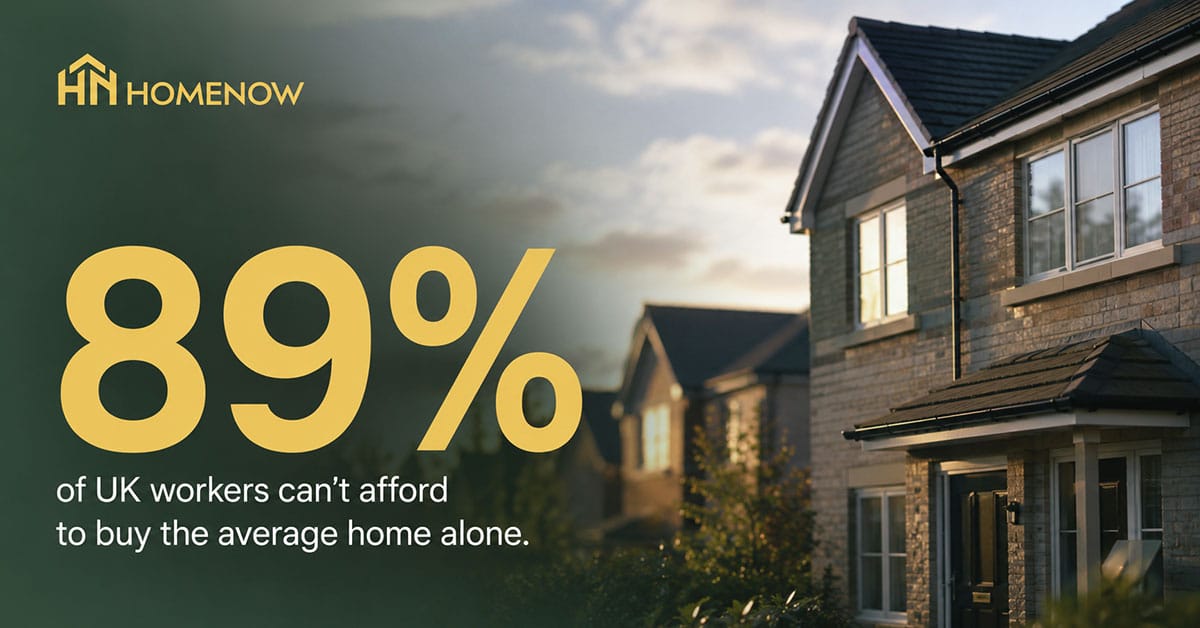
- Only around 11% of UK workers earn enough — meaning almost nine in ten can’t buy alone.
- London is least affordable (£125,737 salary needed); the North East is most accessible (£34,296).
- Home ownership increasingly depends on two incomes and family help — the “Bank of Mum and Dad”.
A new analysis by Savills has highlighted the scale of the housing affordability challenge facing people across Britain. According to research reported by The Times, almost 90% of workers do not earn enough to purchase the average UK home on their own.
The findings paint a stark picture of a housing market that has become increasingly dependent on dual incomes, family assistance and larger deposits, creating significant barriers for first-time buyers.
The Numbers Behind the Challenge
Savills found that a single buyer would need to earn at least £65,520 per year to afford the average UK home, currently valued at £346,744.
The analysis assumed:
- A 25% deposit
- Mortgage borrowing of four times annual salary
- Average house prices from Land Registry data
- Income data from HM Revenue & Customs
Only around 11% of UK workers earn £65,520 or more, meaning almost nine in ten workers cannot afford the average home without support from a partner, family member or other source of financial assistance.
The Regional Divide
Housing affordability varies dramatically across the country.
London
London remains the least affordable region for single buyers.
- Average house price: £670,598
- Salary required: £125,737
- Only around 2% of taxpayers earn enough to afford the average London property alone.
South East England
The South East was the next most challenging area.
- Salary required: £85,726
- Only around 6% of workers earn at or above this level.
North East England
The North East emerged as the most accessible region for single buyers.
- Average house price: £182,915
- Salary required: £34,296
- Average regional earnings: £33,885
Of the 71 constituencies deemed affordable for single buyers, 18 were located in the North East.
The Growing Importance of Two Incomes
The findings reinforce what many aspiring homeowners already know: home ownership increasingly relies on more than one income.
Savills’ Head of Residential Research, Lucian Cook, noted that access to two incomes has become crucial in a higher-interest-rate environment. Combined earnings often make the difference between qualifying for a mortgage and being priced out of the market altogether.
For many buyers, assistance from parents and relatives also plays an important role in raising deposits, leading to the growing influence of what is often referred to as the “Bank of Mum and Dad”.
Are Mortgage Rules Helping?
In recent years, regulators have sought to improve access to mortgages.
Changes have included:
- Relaxing mortgage affordability stress tests
- Allowing lenders greater flexibility with affordability assessments
- Introducing products offering borrowing of up to six times salary for eligible applicants
- Reduced deposit requirements from some lenders
While these changes may improve borrowing capacity for some buyers, they do not address the fundamental challenge of housing affordability in many parts of the country.
Beyond Home Ownership
The debate is no longer simply about getting on the property ladder.
The wider issue concerns whether housing is accessible, affordable and secure for ordinary working people.
When average earnings are significantly lower than the income required to purchase an average home, increasing numbers of individuals and families face difficult decisions about where they live, how they save and what their long-term housing future looks like.
Whether through affordable housing initiatives, new housing supply, planning reform or innovative ownership models, the challenge facing policymakers and housing providers remains clear.
The gap between earnings and house prices continues to widen, and for many people, the dream of owning a home independently is becoming increasingly difficult to achieve.
Frequently Asked Questions
How much do you need to earn to buy a house in the UK alone?
According to Savills, a single buyer needs to earn at least £65,520 per year to afford the average UK home, valued at £346,744 — based on a 25% deposit and borrowing four times salary. Only around 11% of UK workers earn this much.
What percentage of UK workers can’t afford a home on their own?
Almost 90% — nine in ten workers — do not earn enough to buy the average UK home alone without support from a partner, family or other financial assistance.
Which UK region is most affordable for single buyers?
The North East is the most accessible region, with an average house price of £182,915 and a required salary of £34,296 — close to the regional average wage of £33,885. It contained 18 of the 71 constituencies deemed affordable for single buyers.
Which UK region is least affordable for single buyers?
London. The average property costs £670,598 and requires a salary of £125,737, which only around 2% of taxpayers earn.
Why has buying a home alone become so difficult?
House prices have risen far faster than earnings, and higher interest rates have increased the income needed to qualify for a mortgage. As a result, home ownership increasingly depends on two incomes and family help with deposits.
Sources
- Savills Housing Affordability Analysis (2026)
- HM Revenue & Customs earnings data
- HM Land Registry house price data
- The Times, “The numbers that show how hard it is to buy a home alone”, 2 June 2026